Kent Settlement
Достопримечательность
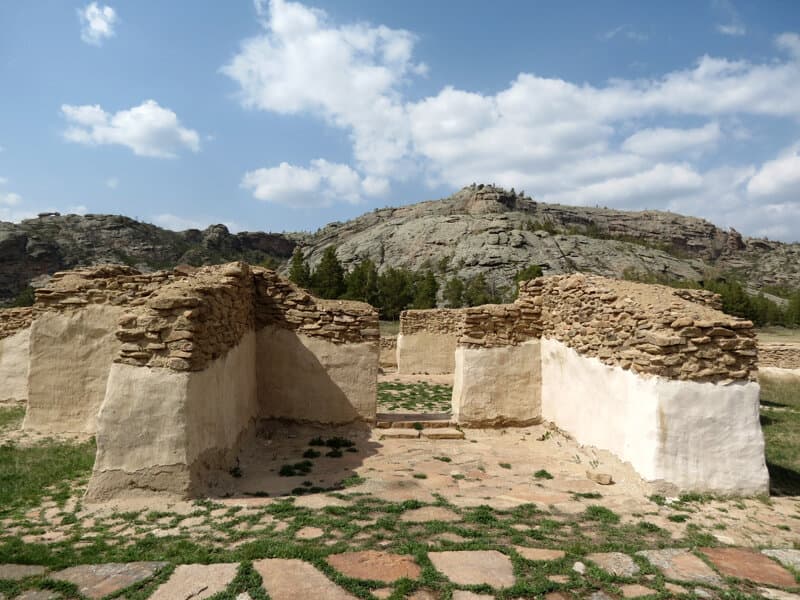
" It is located on the right bank of the valley of the Kyzylkenysh river, on the right bank of the valley of the Kyzykenysh river in the mountains of the village, in the mountain-forest area of the mountains of the village, 6 km from the village of Kent, Karkaraly district, Karaganda region.
According to the results of scientific research, the Kent settlement was one of the largest settlements of the Begaza-Dandybai culture of the late Bronze Age between the Urals and the Altai Mountains in the XIII-IX centuries BC. The area of residential and outbuildings on the right bank was 15 hectares and on the left bank 12 hectares. There are about 100 objects built from a circle, oval, and eightstone shapes. Currently, 14 sites with a total area of more than 3,000 square meters have been excavated. The study estimated that about 2500-3000 people lived in the settlement .
The monumenthas been studied by the Karsu archaeological group since the 80s of the last century.
Traces of human life can be traced in the main cultural strata of the settlement. The thickness of the cultural layer reaches 1.2 m Е. More than 100 bronze objects: hammers, spears, arrowheads, knives, daggers, sickles and other household items were discovered during excavations of the habitat of E. L. In addition, салынған оюbone carving is highly developed here. Bone items include: arrowhead, comb, knife, sickle. Among them, a yna stands out with richly decorated buttons and patternsа. The axe, hoe, hand mill, and other stone tools were crafted with a high level of craftsmanship.
The city of Kent is considered an ancientcity. Itincludes such localities as poselok, Domalak tas, Akimbek, Alat, and Kyzyltas. In Central Kazakhstan, the large settlements Buguly-1 and Myrzhyk ілеспе are associated with the UNT. The settlement differed from other localities in the size of its territory, the number of inhabitants, ritual formations, economic and industrial zones, special shopping centers, economic and administrative departments, and the presence of special items representing the status of rulers.
Residents of the village did not limit themselves to copper mining. Theyalso controlled the production and sale of a strategically important metal - "tin" - and served as intermediaries.
The development of animal husbandry and metallurgy has had a positive impact on the village town, which has become one of the largest centers of culture and trade. This, in turn, indicates that the settlement was the center of a tribal association. As a result, ritual structures and temples were built, with the help of which рthe issue of governance in Wuhan was resolved. Proof of this is found in the places of worship discovered during the study.
Surroundedby mountains, the city of KTT was one of the holiest sites of the time.